 Add to Chrome
 Add to Firefox
 Add to Edge
MidSurfNet: Learnable Face Pairing and Interference Implicit Fields for Generalized Mid-surface Abstraction
Jun 01, 2026
Mid-surface abstraction is essential for finite element analysis of thin-walled CAD models. Existing face pairing-based methods rely on handcrafted geometric heuristics, yet real-world industrial models frequently exhibit multi-wall-thickness regions, self-matching face configurations, and demand for non-center offset surfaces--scenarios where rule-based approaches consistently fail. We present MidSurfNet, a learning-augmented framework that addresses these limitations through two novel components: (1) a neural face pairing module that learns to predict face pair confidence from geometric and topological features, handling complex pairing scenarios beyond rule-based methods; and (2) an interference implicit field that represents mid-surfaces as the interference of two signed distance functions, enabling generalized offset control for flexible positioning in downstream CAE/FEA-oriented workflows. We construct a large-scale mid-surface dataset containing over 1,500 manually annotated CAD models. Experiments demonstrate that MidSurfNet achieves 87.32% face pairing accuracy and successfully handles multi-wall-thickness (61.90% completion) and self-matching (52.94% completion) scenarios that confound all existing methods. Furthermore, MidSurfNet provides a learning-based approach to generalized mid-surface abstraction with arbitrary offset control for CAE-oriented applications.

AirfoilGen: A valid-by-construction and performance-aware latent diffusion model for airfoil generation
May 21, 2026Airfoil shape design is a fundamental task in aerospace engineering, with a direct impact on flight stability and fuel consumption. Deep learning has recently emerged as a promising tool for this task, but existing deep generative approaches remain limited in both geometric validity and physical controllability. They offer little control over the generated shapes, yielding invalid geometries, and they typically do not condition effectively on aerodynamic performance. To address these issues, this paper proposes AirfoilGen, a valid-by-construction and performance-aware latent diffusion model for airfoil. It first introduces a novel airfoil representation scheme, the circle sweeping representation, to constrain the generative process so that output shapes respect essential airfoil characteristics. It then enables explicit control over aerodynamic performance (e.g., lift and drag coefficients) by operating in a learned latent space: a transformer model encodes airfoil shapes into vector embeddings, and a conditional diffusion model denoises Gaussian noise into these latent embeddings while incorporating target aerodynamic performance. In addition, this paper presents a new dataset of over 200,000 airfoils, which is substantially larger than the widely used UIUC airfoil dataset (1,650 airfoils) and more suitable for training modern deep generative models. Experiments demonstrate that AirfoilGen enables airfoil generation with far greater geometric validity and aerodynamic performance controllability than previously achievable, with an average performance-conditioning accuracy of 98.41%.
Bridging Academia and Industry: A Comprehensive Benchmark for Attributed Graph Clustering
Feb 09, 2026Attributed Graph Clustering (AGC) is a fundamental unsupervised task that integrates structural topology and node attributes to uncover latent patterns in graph-structured data. Despite its significance in industrial applications such as fraud detection and user segmentation, a significant chasm persists between academic research and real-world deployment. Current evaluation protocols suffer from the small-scale, high-homophily citation datasets, non-scalable full-batch training paradigms, and a reliance on supervised metrics that fail to reflect performance in label-scarce environments. To bridge these gaps, we present PyAGC, a comprehensive, production-ready benchmark and library designed to stress-test AGC methods across diverse scales and structural properties. We unify existing methodologies into a modular Encode-Cluster-Optimize framework and, for the first time, provide memory-efficient, mini-batch implementations for a wide array of state-of-the-art AGC algorithms. Our benchmark curates 12 diverse datasets, ranging from 2.7K to 111M nodes, specifically incorporating industrial graphs with complex tabular features and low homophily. Furthermore, we advocate for a holistic evaluation protocol that mandates unsupervised structural metrics and efficiency profiling alongside traditional supervised metrics. Battle-tested in high-stakes industrial workflows at Ant Group, this benchmark offers the community a robust, reproducible, and scalable platform to advance AGC research towards realistic deployment. The code and resources are publicly available via GitHub (https://github.com/Cloudy1225/PyAGC), PyPI (https://pypi.org/project/pyagc), and Documentation (https://pyagc.readthedocs.io).
From Shallow Waters to Mariana Trench: A Survey of Bio-inspired Underwater Soft Robots
Jan 18, 2026Sample Exploring the ocean environment holds profound significance in areas such as resource exploration and ecological protection. Underwater robots struggle with extreme water pressure and often cause noise and damage to the underwater ecosystem, while bio-inspired soft robots draw inspiration from aquatic creatures to address these challenges. These bio-inspired approaches enable robots to withstand high water pressure, minimize drag, operate with efficient manipulation and sensing systems, and interact with the environment in an eco-friendly manner. Consequently, bio-inspired soft robots have emerged as a promising field for ocean exploration. This paper reviews recent advancements in underwater bio-inspired soft robots, analyses their design considerations when facing different desired functions, bio-inspirations, ambient pressure, temperature, light, and biodiversity , and finally explores the progression from bio-inspired principles to practical applications in the field and suggests potential directions for developing the next generation of underwater soft robots.
Enhancing Conversational Recommender Systems with Tree-Structured Knowledge and Pretrained Language Models
Nov 16, 2025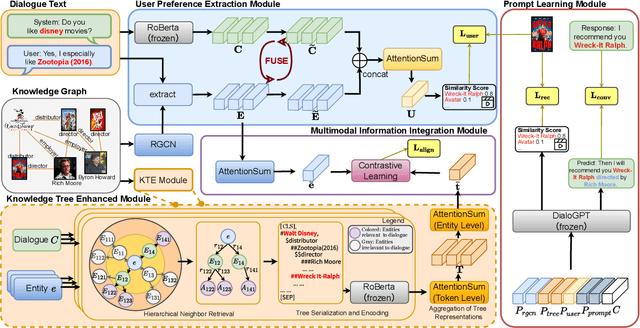
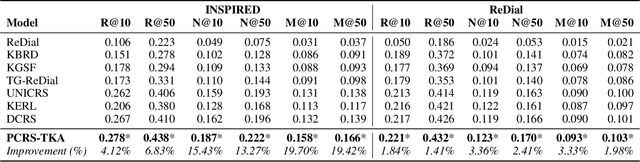
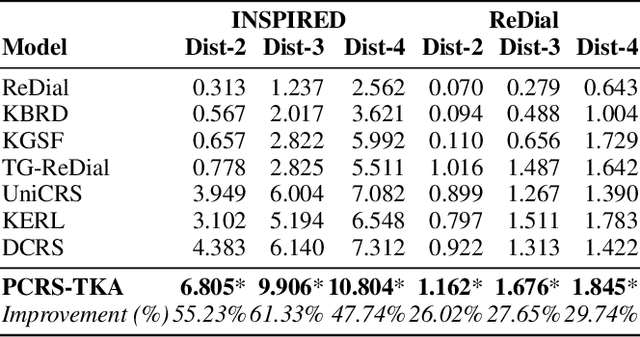
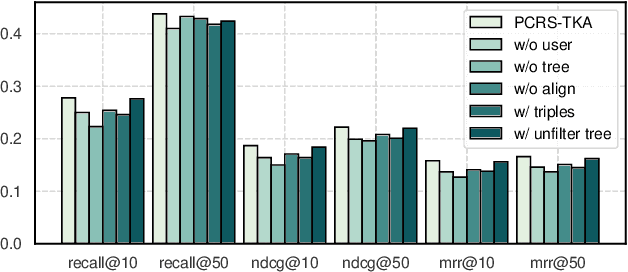
Recent advances in pretrained language models (PLMs) have significantly improved conversational recommender systems (CRS), enabling more fluent and context-aware interactions. To further enhance accuracy and mitigate hallucination, many methods integrate PLMs with knowledge graphs (KGs), but face key challenges: failing to fully exploit PLM reasoning over graph relationships, indiscriminately incorporating retrieved knowledge without context filtering, and neglecting collaborative preferences in multi-turn dialogues. To this end, we propose PCRS-TKA, a prompt-based framework employing retrieval-augmented generation to integrate PLMs with KGs. PCRS-TKA constructs dialogue-specific knowledge trees from KGs and serializes them into texts, enabling structure-aware reasoning while capturing rich entity semantics. Our approach selectively filters context-relevant knowledge and explicitly models collaborative preferences using specialized supervision signals. A semantic alignment module harmonizes heterogeneous inputs, reducing noise and enhancing accuracy. Extensive experiments demonstrate that PCRS-TKA consistently outperforms all baselines in both recommendation and conversational quality.
Large Scalable Cross-Domain Graph Neural Networks for Personalized Notification at LinkedIn
Jun 15, 2025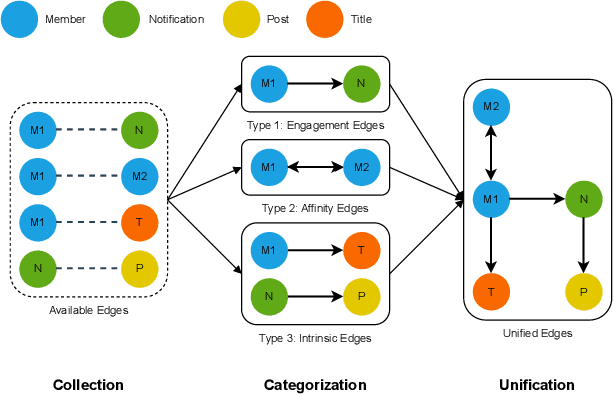
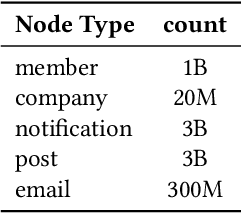
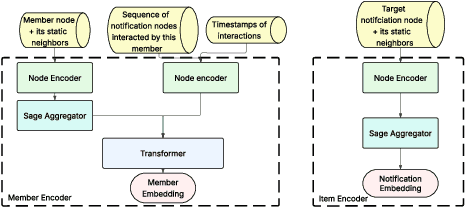
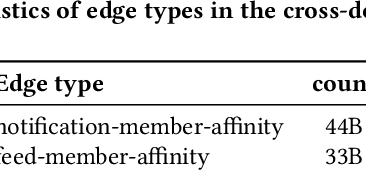
Notification recommendation systems are critical to driving user engagement on professional platforms like LinkedIn. Designing such systems involves integrating heterogeneous signals across domains, capturing temporal dynamics, and optimizing for multiple, often competing, objectives. Graph Neural Networks (GNNs) provide a powerful framework for modeling complex interactions in such environments. In this paper, we present a cross-domain GNN-based system deployed at LinkedIn that unifies user, content, and activity signals into a single, large-scale graph. By training on this cross-domain structure, our model significantly outperforms single-domain baselines on key tasks, including click-through rate (CTR) prediction and professional engagement. We introduce architectural innovations including temporal modeling and multi-task learning, which further enhance performance. Deployed in LinkedIn's notification system, our approach led to a 0.10% lift in weekly active users and a 0.62% improvement in CTR. We detail our graph construction process, model design, training pipeline, and both offline and online evaluations. Our work demonstrates the scalability and effectiveness of cross-domain GNNs in real-world, high-impact applications.
QAMA: Quantum annealing multi-head attention operator with classical deep learning framework
Apr 15, 2025As large language models scale up, the conventional attention mechanism faces critical challenges of exponential growth in memory consumption and energy costs. Quantum annealing computing, with its inherent advantages in computational efficiency and low energy consumption, offers an innovative direction for constructing novel deep learning architectures. This study proposes the first Quantum Annealing-based Multi-head Attention (QAMA) mechanism, achieving seamless compatibility with classical attention architectures through quadratic unconstrained binary optimization (QUBO) modeling of forward propagation and energy-based backpropagation. The method innovatively leverages the quantum bit interaction characteristics of Ising models to optimize the conventional $O(n^2)$ spatiotemporal complexity into linear resource consumption. Integrated with the optical computing advantages of coherent Ising machines (CIM), the system maintains millisecond-level real-time responsiveness while significantly reducing energy consumption. Our key contributions include: Theoretical proofs establish QAMA mathematical equivalence to classical attention mechanisms; Dual optimization of multi-head specificity and long-range information capture via QUBO constraints; Explicit gradient proofs for the Ising energy equation are utilized to implement gradient conduction as the only path in the computational graph as a layer; Proposed soft selection mechanism overcoming traditional binary attention limitations to approximate continuous weights. Experiments on QBoson CPQC quantum computer show QAMA achieves comparable accuracy to classical operators while reducing inference time to millisecond level and improving solution quality. This work pioneers architectural-level integration of quantum computing and deep learning, applicable to any attention-based model, driving paradigm innovation in AI foundational computing.
Sell It Before You Make It: Revolutionizing E-Commerce with Personalized AI-Generated Items
Mar 28, 2025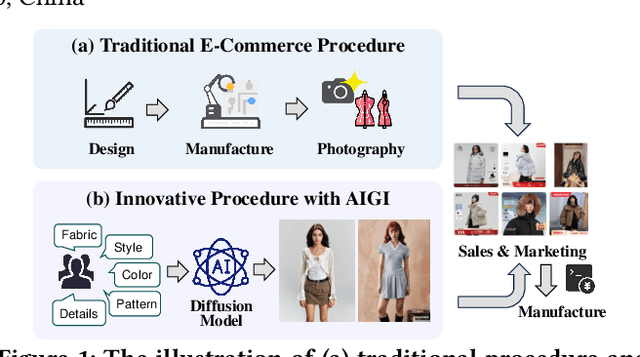
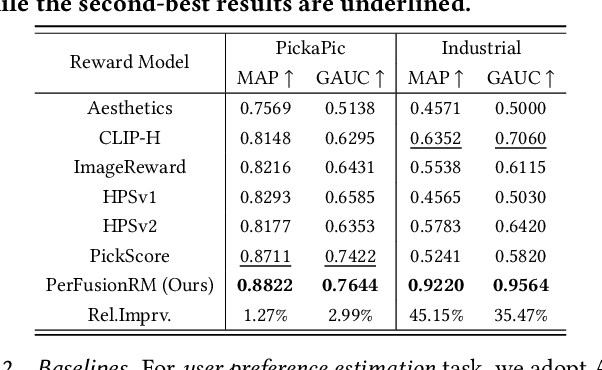
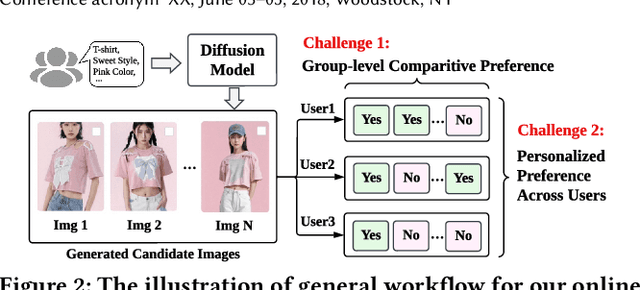
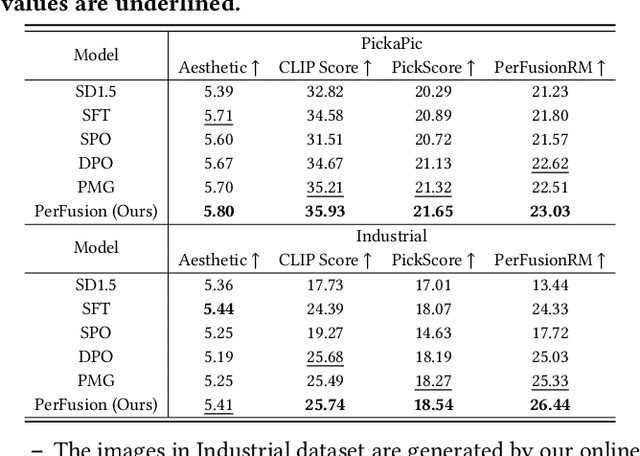
E-commerce has revolutionized retail, yet its traditional workflows remain inefficient, with significant time and resource costs tied to product design and manufacturing inventory. This paper introduces a novel system deployed at Alibaba that leverages AI-generated items (AIGI) to address these challenges with personalized text-to-image generation for e-commercial product design. AIGI enables an innovative business mode called "sell it before you make it", where merchants can design fashion items and generate photorealistic images with digital models based on textual descriptions. Only when the items have received a certain number of orders, do the merchants start to produce them, which largely reduces reliance on physical prototypes and thus accelerates time to market. For such a promising application, we identify the underlying key scientific challenge, i.e., capturing the users' group-level personalized preferences towards multiple generated candidate images. To this end, we propose a Personalized Group-Level Preference Alignment Framework for Diffusion Models (i.e., PerFusion). We first design PerFusion Reward Model for user preference estimation with a feature-crossing-based personalized plug-in. Then we develop PerFusion with a personalized adaptive network to model diverse preferences across users, and meanwhile derive the group-level preference optimization objective to capture the comparative behaviors among multiple candidates. Both offline and online experiments demonstrate the effectiveness of our proposed algorithm. The AI-generated items have achieved over 13% relative improvements for both click-through rate and conversion rate compared to their human-designed counterparts, validating the revolutionary potential of AI-generated items for e-commercial platforms.
RLCAD: Reinforcement Learning Training Gym for Revolution Involved CAD Command Sequence Generation
Mar 24, 2025A CAD command sequence is a typical parametric design paradigm in 3D CAD systems where a model is constructed by overlaying 2D sketches with operations such as extrusion, revolution, and Boolean operations. Although there is growing academic interest in the automatic generation of command sequences, existing methods and datasets only support operations such as 2D sketching, extrusion,and Boolean operations. This limitation makes it challenging to represent more complex geometries. In this paper, we present a reinforcement learning (RL) training environment (gym) built on a CAD geometric engine. Given an input boundary representation (B-Rep) geometry, the policy network in the RL algorithm generates an action. This action, along with previously generated actions, is processed within the gym to produce the corresponding CAD geometry, which is then fed back into the policy network. The rewards, determined by the difference between the generated and target geometries within the gym, are used to update the RL network. Our method supports operations beyond sketches, Boolean, and extrusion, including revolution operations. With this training gym, we achieve state-of-the-art (SOTA) quality in generating command sequences from B-Rep geometries. In addition, our method can significantly improve the efficiency of command sequence generation by a factor of 39X compared with the previous training gym.
A Continual Learning-driven Model for Accurate and Generalizable Segmentation of Clinically Comprehensive and Fine-grained Whole-body Anatomies in CT
Mar 16, 2025Precision medicine in the quantitative management of chronic diseases and oncology would be greatly improved if the Computed Tomography (CT) scan of any patient could be segmented, parsed and analyzed in a precise and detailed way. However, there is no such fully annotated CT dataset with all anatomies delineated for training because of the exceptionally high manual cost, the need for specialized clinical expertise, and the time required to finish the task. To this end, we proposed a novel continual learning-driven CT model that can segment complete anatomies presented using dozens of previously partially labeled datasets, dynamically expanding its capacity to segment new ones without compromising previously learned organ knowledge. Existing multi-dataset approaches are not able to dynamically segment new anatomies without catastrophic forgetting and would encounter optimization difficulty or infeasibility when segmenting hundreds of anatomies across the whole range of body regions. Our single unified CT segmentation model, CL-Net, can highly accurately segment a clinically comprehensive set of 235 fine-grained whole-body anatomies. Composed of a universal encoder, multiple optimized and pruned decoders, CL-Net is developed using 13,952 CT scans from 20 public and 16 private high-quality partially labeled CT datasets of various vendors, different contrast phases, and pathologies. Extensive evaluation demonstrates that CL-Net consistently outperforms the upper limit of an ensemble of 36 specialist nnUNets trained per dataset with the complexity of 5% model size and significantly surpasses the segmentation accuracy of recent leading Segment Anything-style medical image foundation models by large margins. Our continual learning-driven CL-Net model would lay a solid foundation to facilitate many downstream tasks of oncology and chronic diseases using the most widely adopted CT imaging.